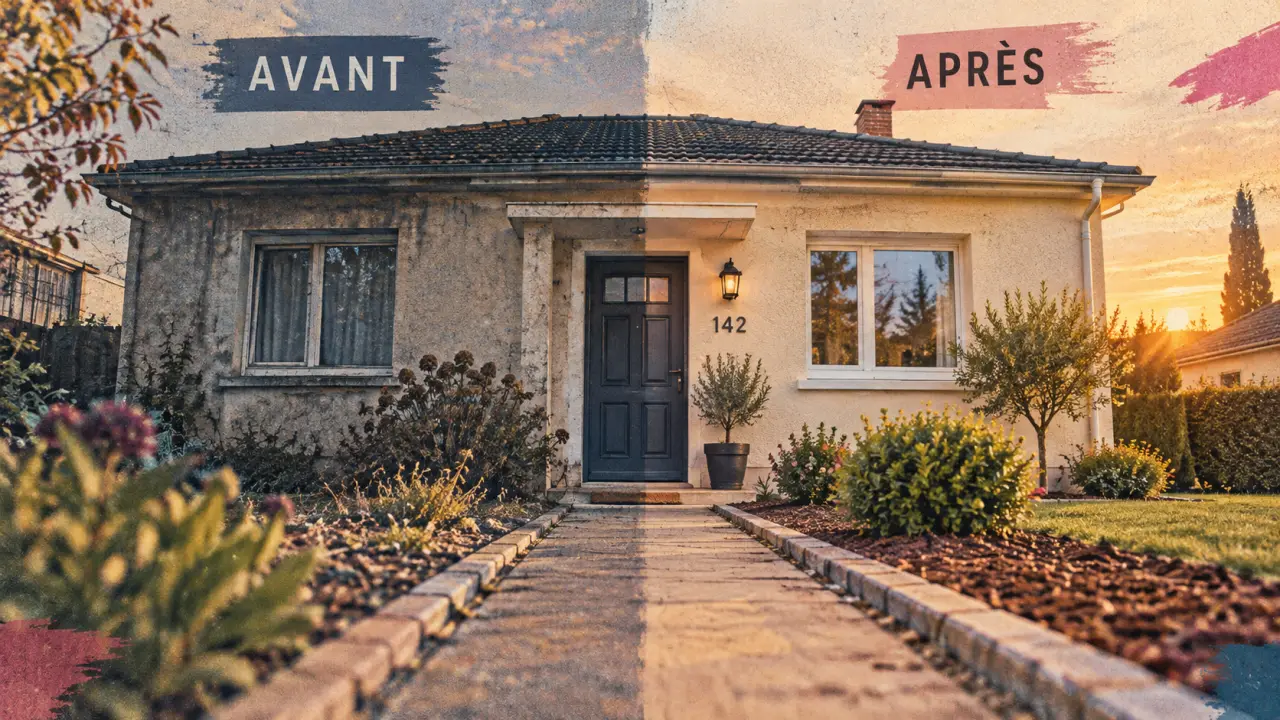
The most convincing curb appeal before and after transformations rarely begin with a full exterior rebuild. They start by removing what distracts the eye: overgrown shrubs, stained paths, faded paint, mismatched fixtures, and an entrance that disappears into the facade. Address those issues in the right order, and even a modest home can look noticeably better cared for from the street.
Read a before-and-after transformation like a homeowner
A useful comparison does more than show a prettier “after” photo. Look for the specific problem in the original view, then identify the change that solved it. A front yard may look neglected because plants hide the windows, not because it needs an expensive new landscape. A plain facade may need contrast around the door and trim rather than new siding.
Start with the street-facing view
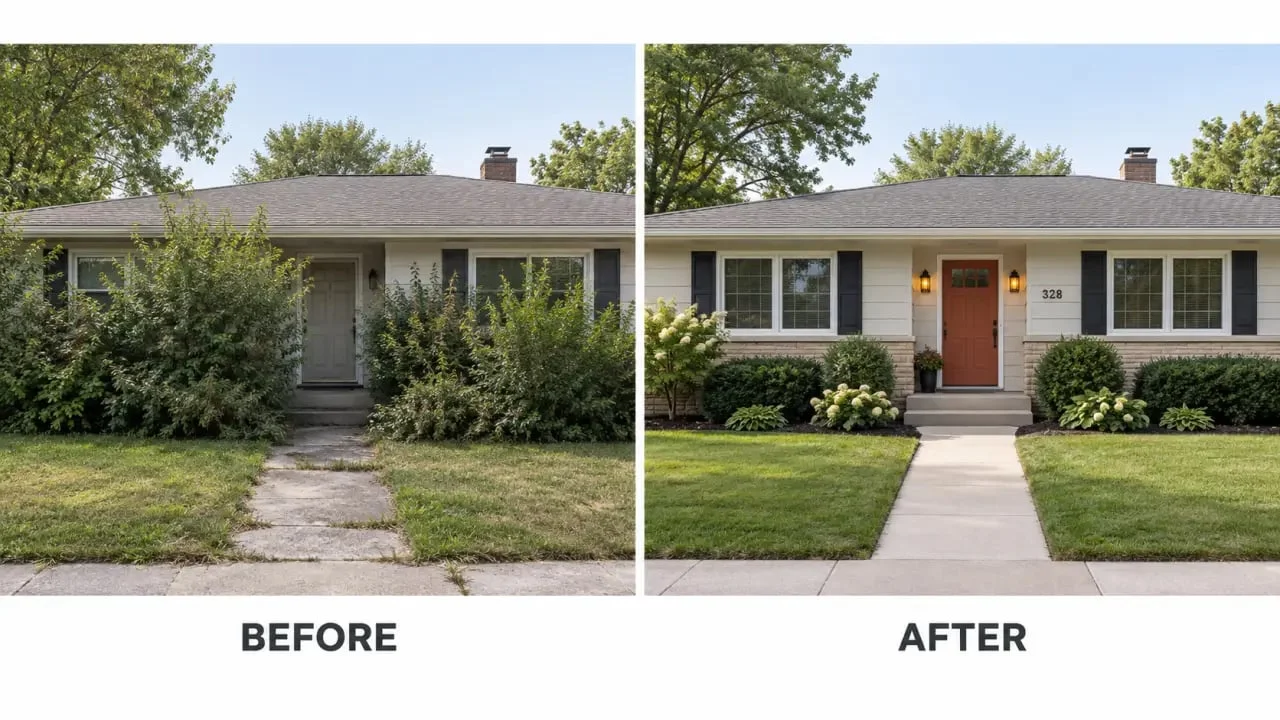
Stand at the curb and take one straight-on photo of the house. This becomes your baseline. Notice where your eye lands first, whether the front door is easy to find, and whether the roofline, windows, and walkway feel connected. Repeat the photograph after each project. It is a simple way to separate a real improvement from a purchase that looked good in isolation.
Think of the facade as a composition. The house is framed by the edges of the lot, while the walkway creates a visual line toward the entrance. Cluttered beds, oversized containers, and dense shrubs can block that line. Clear the foreground, define the path, and use a single focal point at the door. The whole elevation will be easier to read at a glance.
Separate maintenance from renovation
Before replacing anything, clean the siding, wash the front door, remove weeds, prune away from windows, and repair obvious cracks or loose hardware. These tasks reveal the home’s actual condition. If the paint is still sound and the roof is intact, maintenance may deliver the “after” effect you wanted. If you find water damage, rotten trim, failing steps, or drainage problems, treat those issues as repairs first, not cosmetic upgrades.
The highest-impact changes usually happen at the entrance
The front entrance is the destination of every walkway and the natural focal point of the facade. A strong update does not have to mean a new porch. It means making the route, threshold, and lighting feel intentional.
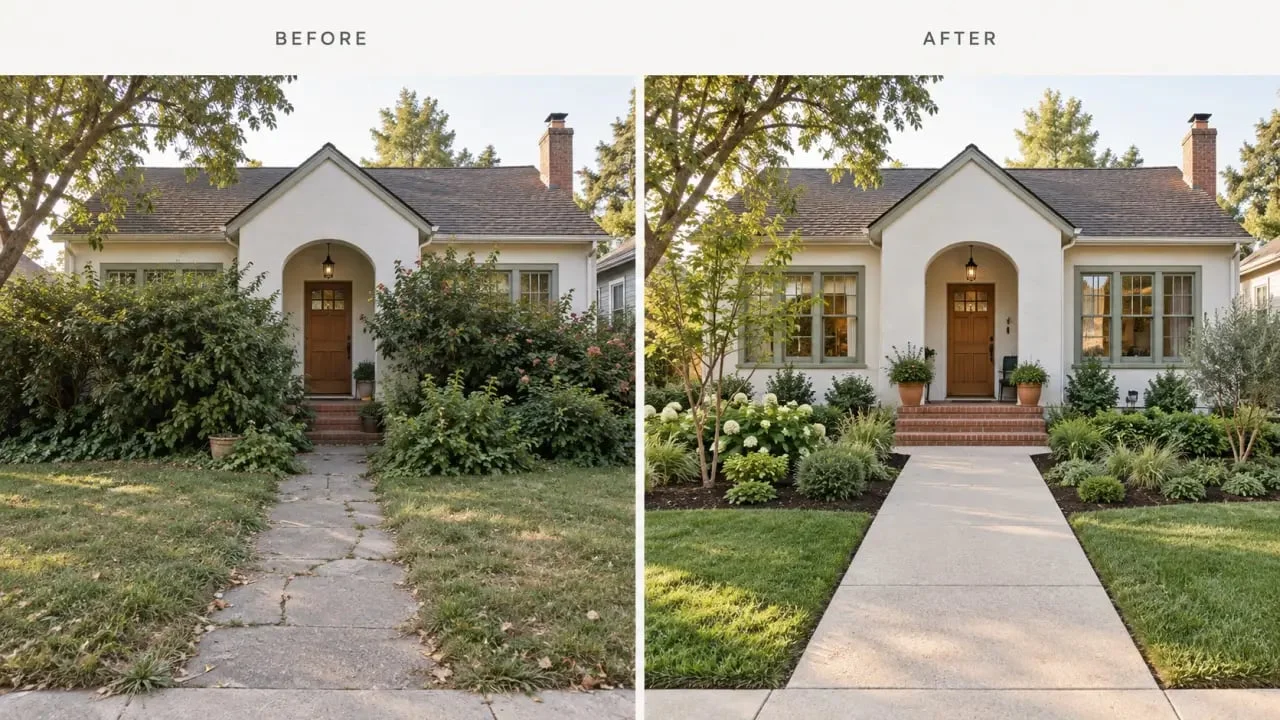
- Front door: Repaint a sound door in a color that contrasts with the main facade, or replace it when it is warped, poorly sealed, or beyond repair.
- House numbers and mailbox: Choose finishes that relate to the light fixtures instead of adding another unrelated style.
- Porch and steps: Repair railings, refresh a worn porch floor, and check that every tread is stable and safe.
- Lighting: Use properly placed wall lanterns at the entry and low-level lighting to clarify the walking route after dark.
For a ranch house, a darker door, broader planting beds, and a more visible path can add definition without imposing a style the home does not have. A Craftsman home benefits from preserving tapered columns, porch railings, and trim proportions. Cottage and colonial facades often carry more detail, so restrained colors keep the exterior from becoming visually busy.
Landscaping creates the frame, not a wall of plants
In many curb appeal before and after examples, the biggest visual gain comes from editing the yard. Foundation planting should soften the base of the house while leaving doors, windows, and architectural details visible. Plants that have outgrown the space can make a well-built home look smaller and darker.
Build clear layers from curb to door
Begin with lawn edges and flower beds. Clean edges, fresh mulch, and a few repeated plant varieties often look calmer than a collection of unrelated flowers. Place lower plants near the front of a bed, medium shrubs nearer the facade, and keep taller planting away from windows and entry sightlines. In dry or busy households, low-maintenance, climate-appropriate plants and a stone or gravel path may be more sensible than a thirsty lawn.
Make the walkway do its job
A cracked or narrow walkway weakens an otherwise tidy exterior because it signals neglect and makes the approach less comfortable. Repairing the surface may be enough. Where replacement is justified, pavers, brick, flagstone, gravel, and concrete each create a different character. The material should suit the house and remain easy to maintain.
A polished new path beside unfinished steps or a damaged porch will make the remaining problems more obvious. Complete the approach as a group when possible: the path, steps, railings, and entrance should work together rather than compete for attention.
Use paint and materials to restore proportion
Paint is one of the most effective exterior tools because it changes contrast, scale, and emphasis without changing the structure. A simple palette usually works best: one main body color, one trim color, and a deliberate accent at the door. Garage doors generally recede when painted to match the body color. Treating them as a major accent can pull attention away from the entrance.
| Project | Visual impact | DIY suitability | When to call a professional |
|---|---|---|---|
| Cleaning, pruning, mulch, planters | High for the cost | Usually suitable | For large trees or drainage work |
| Door and trim painting | High | Suitable with careful preparation | For lead-paint concerns or major rot |
| Lighting and house numbers | Moderate to high | Solar options are simple | For new electrical wiring |
| Siding, roof, windows, porch rebuild | Very high | Rarely a first DIY project | For assessment, permits, and installation |
Do not use paint to disguise a failing surface. Peeling siding, persistent tannin staining, damaged shingles, or soft wood need investigation before any color decision. Larger work such as new siding, roofing, energy-efficient windows, or a porch rebuild can transform proportions and durability, but it should follow a clear condition assessment and a realistic maintenance plan.
Plan the work in stages so the result holds up
A staged approach protects the budget and prevents attractive finishes from being damaged by later repairs. First address safety, water management, and deterioration. Next clean, prune, and repair. Then make cosmetic improvements to the entry, planting beds, lighting, and paint. Reserve major changes to siding, windows, rooflines, or porches for when the existing elements genuinely need replacement or no longer suit the home.
- Photograph the facade in daylight and at dusk, then list what looks neglected, unsafe, or visually confusing.
- Check local rules before changing structural elements, exterior lighting, fences, or major landscaping.
- Choose one visual priority: a clearer entrance, healthier planting, or a more coherent color scheme.
- Finish the small repairs before buying decorative items.
- Set aside time for ongoing pruning, cleaning, and touch-ups so the “after” view lasts.
The goal is not to make every house look newly built. It is to make its best features visible, its entrance welcoming, and its exterior easier to care for. That is what turns a dramatic photo comparison into a practical, durable improvement.
{“@type”:”Article”,”@context”:”https://schema.org”,”headline”:”Small Curb Appeal Changes That Make a Front Elevation Look New”,”inLanguage”:”en-US”,”description”:”The most convincing curb appeal before and after transformations rarely begin with a full exterior rebuild. They start by removing what distracts the eye: overgrown shrubs,…”}
Related guides to continue
To build a stronger understanding of this topic, continue with these related guides from the same site. They cover nearby decisions, maintenance points and practical details that often influence the final result.