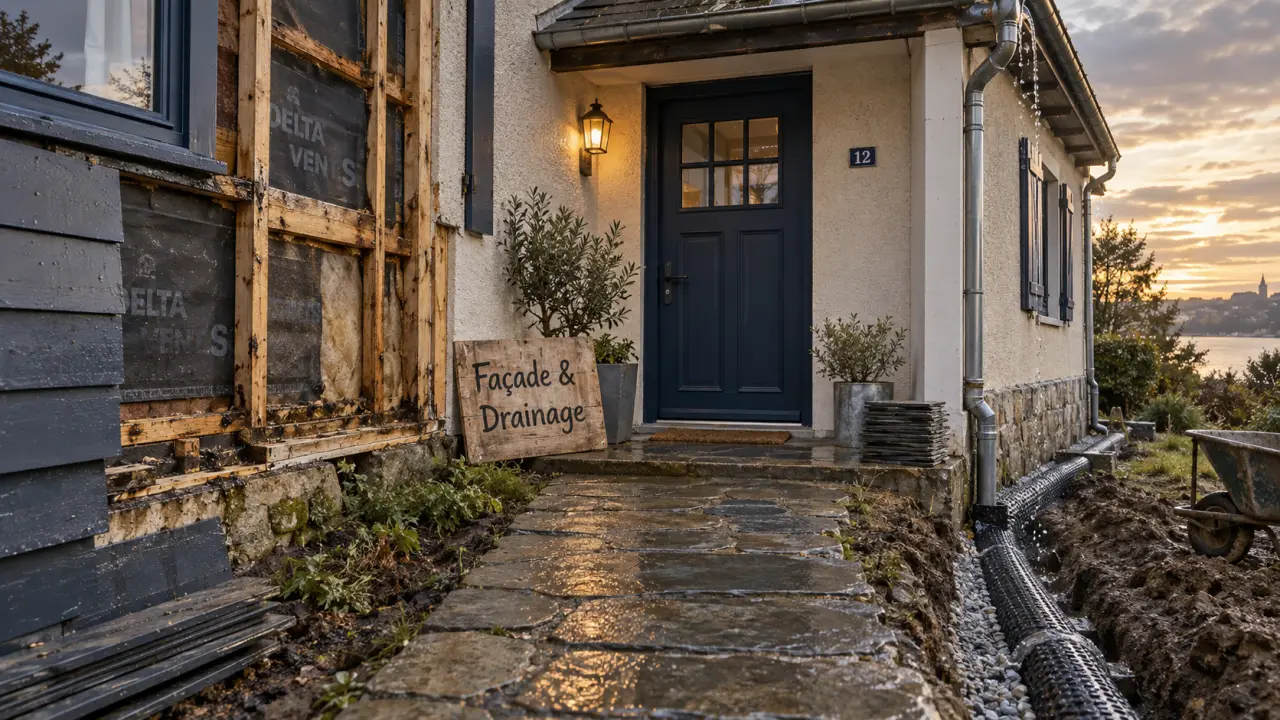
The best exterior changes do more than make a house look newer from the street. They protect the building envelope, make the entrance easier to use, and create a clearer link between the home, garden, and driveway. Start with repairs that keep water out, then choose visible upgrades that work together.
Start with the exterior problems that cannot wait
Before choosing a front-door color or ordering new lighting, walk around the property after rain. Look for peeling paint, cracked or warped siding, loose trim, overflowing gutters, soft timber, damaged fascia, and water pooling near the foundation. These are more than cosmetic details. They can reveal moisture exposure that will undermine a more attractive renovation.
Use a simple urgency filter
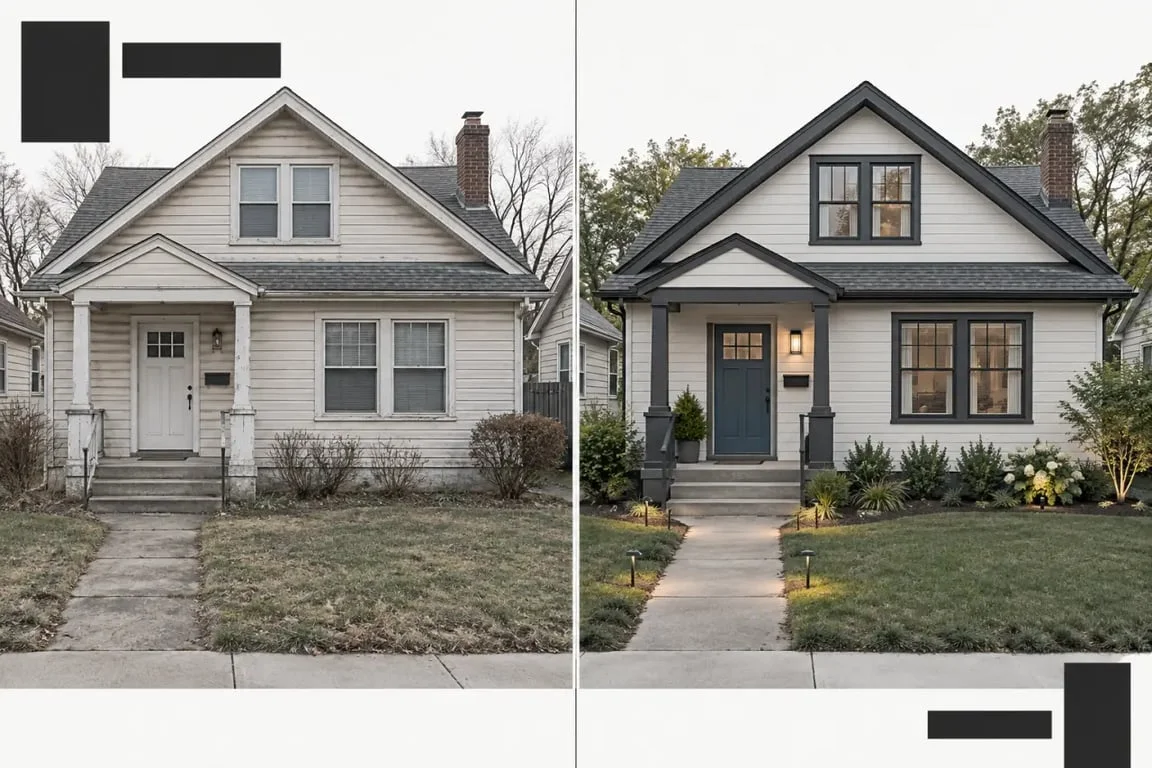
Put each project into one of three groups: protection, function, and appearance. Roofing, drainage, failing windows, unstable railings, and damaged cladding belong in the protection group. An unsafe path, poor entry lighting, or a lack of privacy are functional issues. Paint, hardware, planting, and shutters are appearance upgrades. This order helps prevent the common mistake of finishing a façade, then reopening it for repairs.
Work from the roof down and from the house outward
A sensible sequence is roof and flashing first, followed by gutters, siding or masonry repairs, windows and doors, trim, porch details, hardscaping, lighting, and planting. Coordinate roof and siding colors before either is installed. This top-down, outside-in sequence also keeps ladders, debris, and contractors from damaging a new path, fresh mulch, or carefully chosen shrubs.
Choose outdoor home renovation ideas by visual impact
A full façade replacement is not the only route to better curb appeal. Strong results often come from improving the largest visible surfaces first, then sharpening the details people notice at the front entry.
| Upgrade | What it changes | Maintenance consideration | Best handled by |
|---|---|---|---|
| Paint and trim | Refreshes a tired color scheme and defines architectural lines | Inspect regularly for peeling and failed caulk | DIY for sound, low-level surfaces; professional for extensive preparation |
| Siding or mixed materials | Transforms the largest visible wall areas | Material choice affects cleaning, repainting, and repairs | Qualified siding installer |
| Front door and hardware | Creates a focal point and improves daily use | Keep weather seals and finishes in good condition | DIY refresh or door specialist for replacement |
| Lighting and pathways | Improves nighttime safety and the evening view | Check fixtures, connections, and glare | Licensed electrician for new wiring |
| Planting and fencing | Adds softness, privacy, and property definition | Allow for mature growth and seasonal care | DIY planting; professional for major grading or fencing |
Give the entry a clear job
A welcoming entry needs contrast, not clutter. A painted door, properly scaled house numbers, a durable handle set, and two matching light fixtures can make an older façade feel intentional. If the porch is narrow, avoid oversized planters that obstruct the route. Where space allows, a covered porch, updated railings, or wrapped columns can add depth and shelter.
Use materials to frame, not overwhelm
Fiber cement, vinyl, engineered wood, brick, stucco, wood siding, and stone veneer each create a different level of texture and maintenance. A mixed-material façade works best when one finish remains dominant and the accent is reserved for a gable, entry surround, chimney, or lower wall. Board-and-batten adds vertical emphasis, while lap siding usually reads as calmer and more traditional.
Build a color palette that respects the house
Good exterior color choices relate to fixed elements such as the roof, brick, stone, driveway, window frames, and surrounding landscape. Instead of selecting several competing colors, use a main wall color, a trim color, and one restrained accent for the door or shutters.
Match contrast to the architecture
Contemporary homes often suit a quiet palette with dark window frames, warm timber, or a stone accent. Craftsman and colonial exteriors can carry more trim definition, while coastal homes usually benefit from lighter, sun-friendly colors. Dark siding may look crisp, but south- and west-facing walls deserve extra thought because those elevations receive strong sun exposure.
Preview before buying
A clear smartphone photo can be enough to test paint, siding, roofing, door colors, and landscaping with an exterior visualizer. Generate a few deliberately different options rather than tiny variations of the same scheme. A saved rendering gives two or three contractors a shared design brief, making their bids easier to compare by scope rather than vague impressions.
Let landscaping solve practical problems too
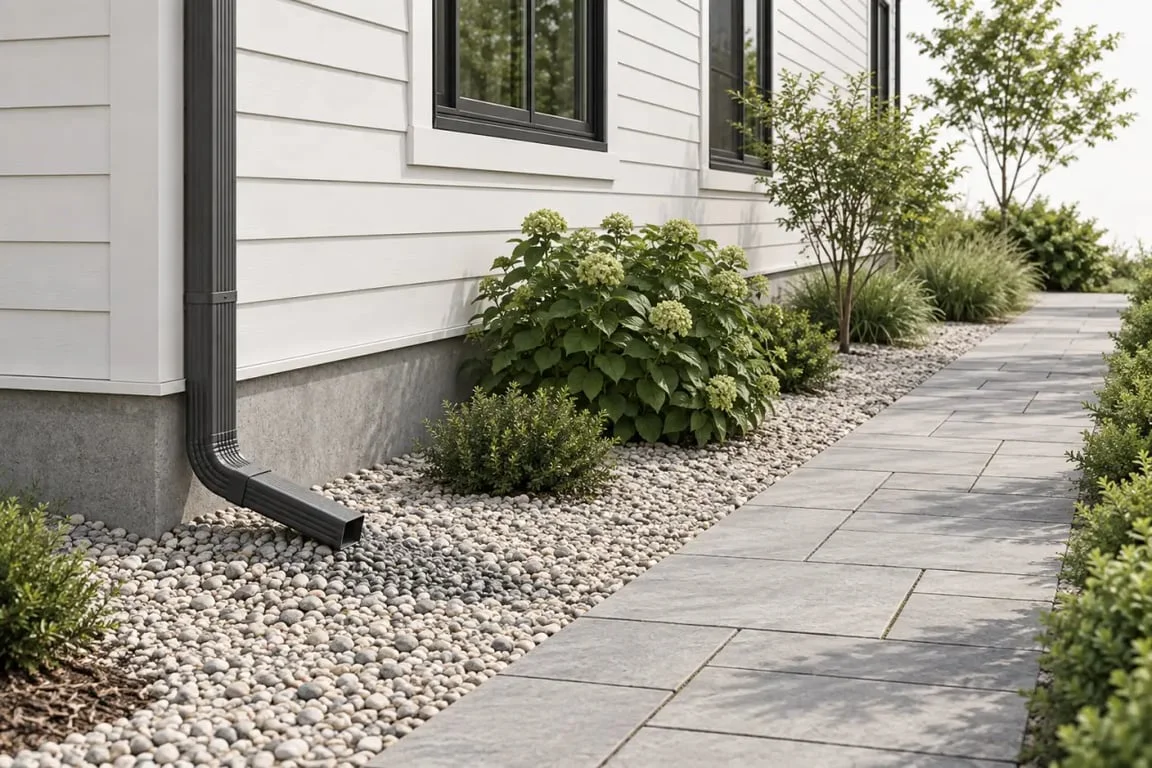
Landscaping can improve drainage, privacy, shade, access, and the view from inside. Begin with grading and downspout discharge: water should move away from the house, not collect beside the foundation or wash across a walkway.
Plant for the house you will have in five years
Check mature height, spread, root behavior, climate, and sun exposure before planting. Shrubs that look neat on installation day can eventually cover windows, trap moisture against siding, or lift a sidewalk. Keep an accessible maintenance strip between planting beds and the wall so gutters, vents, and exterior finishes remain easy to inspect.
Pruning is not just about making a shrub smaller. It can reveal the shape behind it and improve the façade. Open a sightline to the front door, expose attractive window casing, and remove branches that rub the roof or crowd lighting. This selective editing often creates more impact than adding another layer of plants. It also improves airflow and makes defects easier to spot.
Know when a professional is worth it
DIY work is realistic for cleaning, painting sound trim, swapping surface hardware, installing simple planting, and refreshing mulch. Hire professionals for roofing, structural porch changes, major siding work, new exterior circuits, significant grading, and fences near property lines. Fence projects may require a permit, property verification, a survey, careful leveling, and alignment with local rules. Confirm requirements with the local building department before materials arrive.
Plan for durability, not just the reveal day
Exterior renovation costs and timelines depend on home size, access, material selection, weather, demolition, and hidden repairs. A paint-and-trim project may be completed in days, while full siding replacement can take 1–2+ weeks depending on the home size and weather. Keep a contingency for conditions revealed after old finishes are removed.
Ask contractors for written scope details covering preparation, waterproofing, flashing, sealants, disposal, permits, warranty terms, and responsibility for incidental damage. Verify licensing, insurance, and references where applicable. The most satisfying result is not necessarily the boldest one. It is an exterior that looks composed, drains properly, suits its climate, and remains manageable to maintain.
{“@type”:”Article”,”@context”:”https://schema.org”,”headline”:”Outdoor Home Renovation Ideas That Protect the House and Improve Curb Appeal”,”inLanguage”:”en-US”,”description”:”The best exterior changes do more than make a house look newer from the street. They protect the building envelope, make the entrance easier to use, and create a clearer link…”}
Related guides to continue
To build a stronger understanding of this topic, continue with these related guides from the same site. They cover nearby decisions, maintenance points and practical details that often influence the final result.