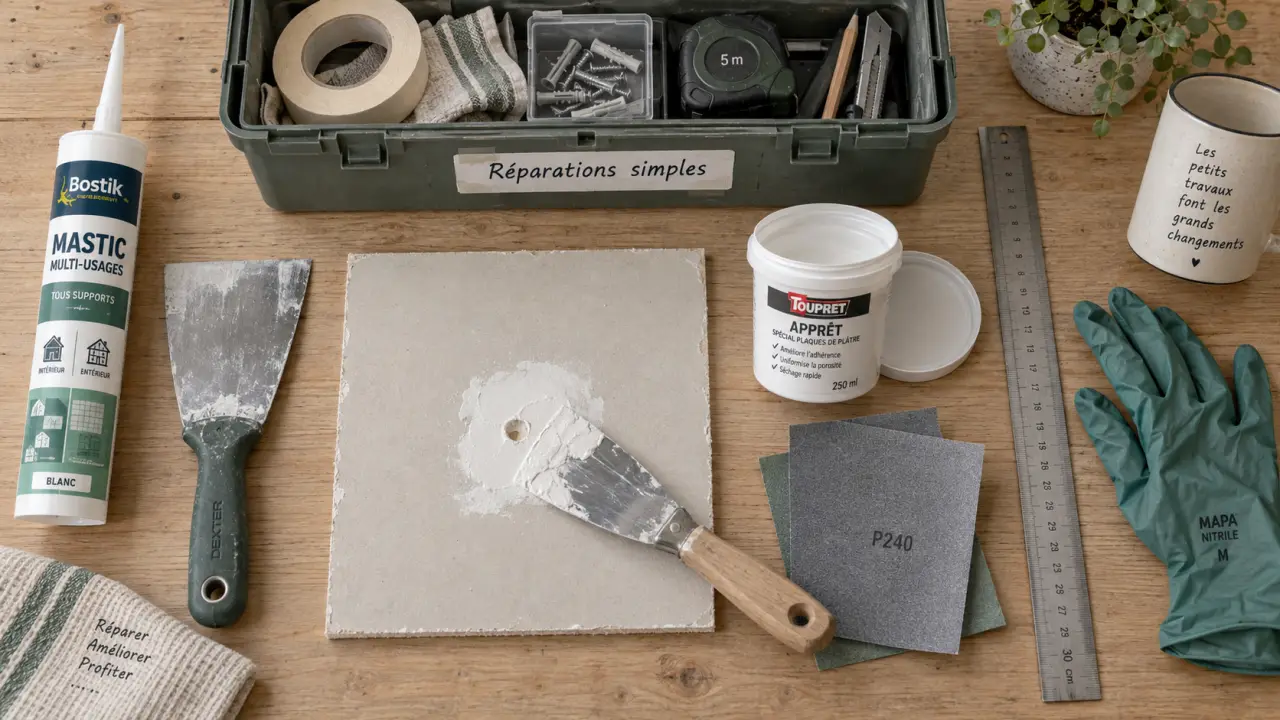
Learning a few simple home repairs can prevent minor annoyances from turning into expensive service calls. A dripping faucet, drafty window, running toilet, or small wall dent often needs basic tools and patience. The sensible starting point is knowing what you are looking at, isolating water or power when necessary, and recognising when a repair is no longer minor.
Choose the repair before buying tools
For a first project, choose a visible, contained problem with no hidden systems behind it. Cosmetic damage and accessible fittings are usually better places to start than pipes inside walls, roof coverings, or electrical wiring. Keep a small kit ready so a ten-minute job does not become an unnecessary trip to the hardware store.
| Repair | Difficulty | Useful tools and materials | Stop and get help if |
|---|---|---|---|
| Small drywall hole | Low | Spackle, putty knife, sandpaper, primer | The wall is damp, crumbling, or the opening is large |
| Draft around a window or door | Low | Caulk gun, suitable caulk, smoothing tool | There is rot, mold, or a frame that has moved |
| Dripping faucet | Low to moderate | Wrench, replacement washer, plumber’s tape | The shutoff valve fails or water leaks below the cabinet |
| Running toilet | Low to moderate | Toilet repair kit, replacement flapper or fill valve | Water is leaking onto the floor or the bowl is cracked |
Before touching anything, locate the relevant shutoff. For plumbing, test that the local valve actually stops the water. For a toilet, it is usually close to the fixture. Wear gloves and eye protection when sanding, cleaning, or using tools. If you rent, check your lease first. Even a straightforward repair may be the landlord’s responsibility.
Four fixes that build useful DIY habits
Patch a small drywall hole without creating a larger blemish
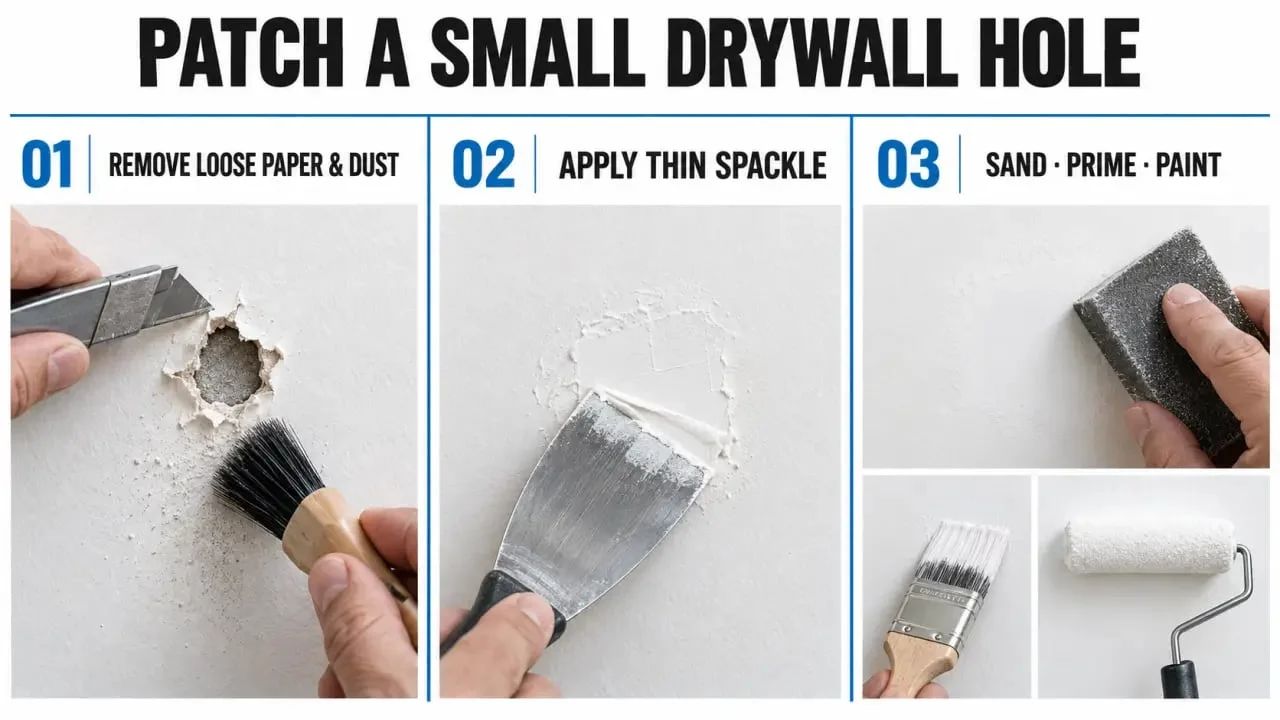
Remove loose paper and dust, then press a thin layer of spackle into the hole with a putty knife. Let it dry fully before sanding lightly. A second thin coat is often neater than one thick application. Wipe away the sanding dust, apply primer to the patched area, and paint. Without primer, the patch can absorb paint differently and remain visible despite careful work.
Seal drafts at windows and doors
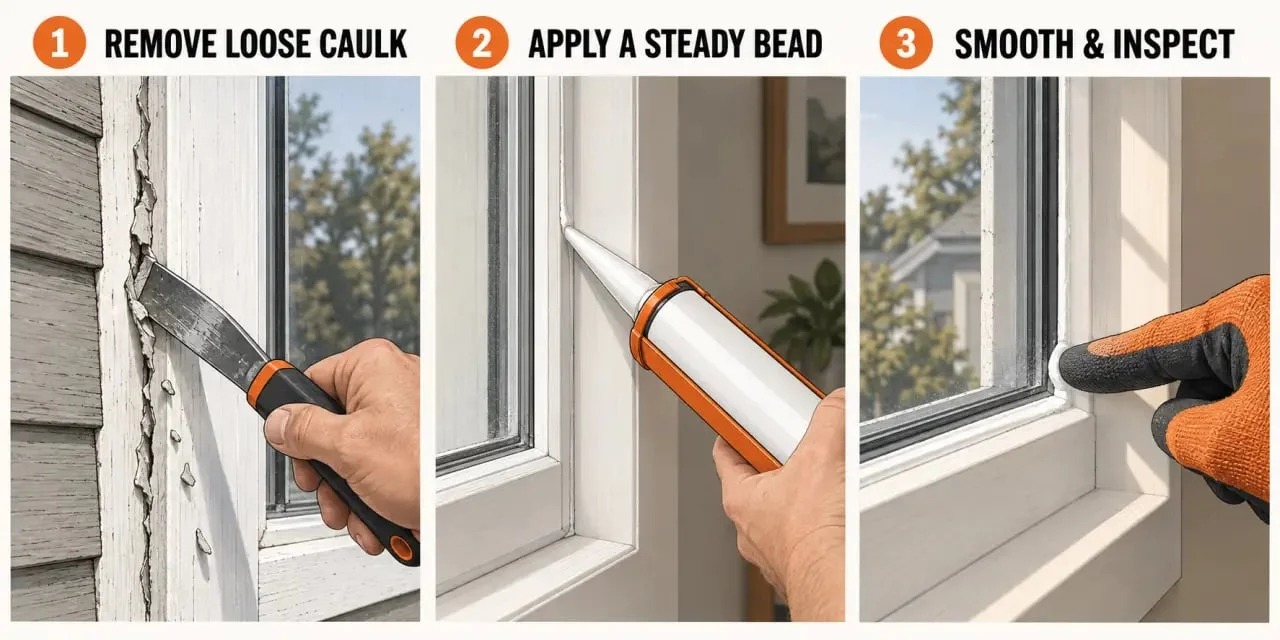
Old caulk does not always mean that more caulk is the answer. First remove loose or split material and clean the joint so the new bead can bond. Cut the nozzle opening small, apply a steady bead, and smooth it promptly with a caulk-smoothing tool. Seal gaps where the frame meets the wall. Avoid moving joints, which need a different flexible solution.
Inspect the window from indoors and outdoors, in daylight and with a lamp held at an angle. The changing reflection can reveal hairline gaps, uneven caulk edges, and missed paint ridges that are almost invisible when viewed straight on. This simple check improves the finish and helps prevent a small flaw from becoming a recurring draft or point of water entry.
Deal with a drip or a toilet that keeps refilling
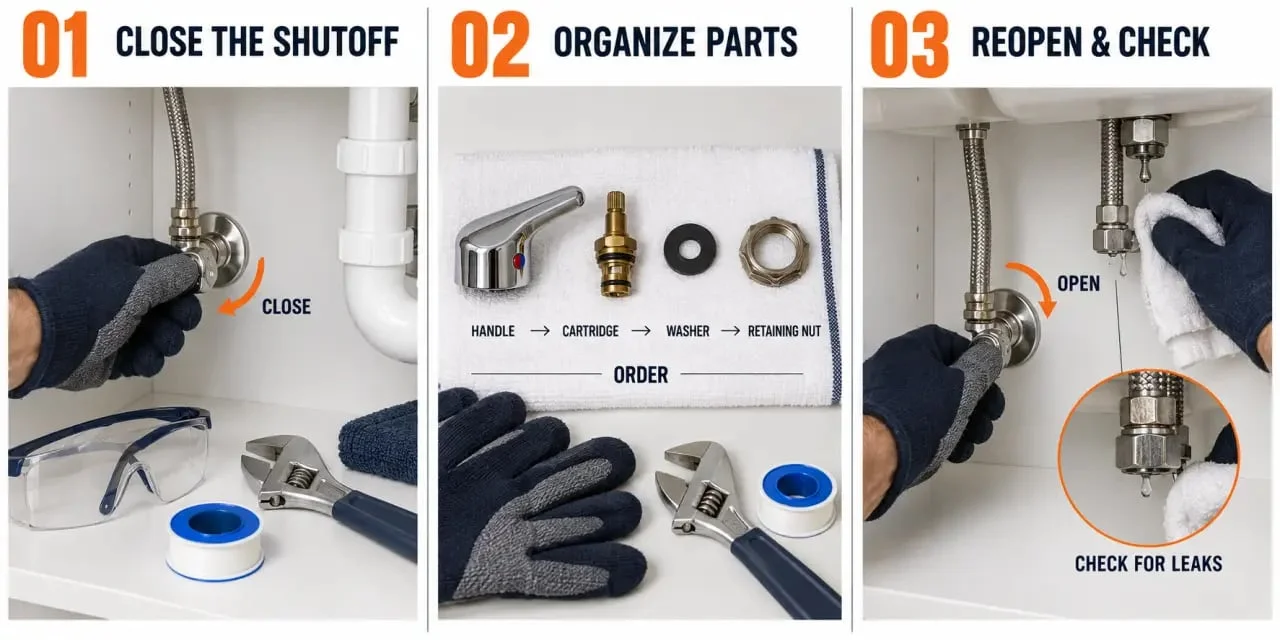
A faucet drip may come from a worn washer. Shut off the water supply, open the tap to release pressure, and place the removed parts in order on a towel. Replace the matching worn part, use plumber’s tape where appropriate, reassemble everything, and turn the water back on slowly while checking for leaks.
For a running toilet, inspect the flapper first. If it no longer seals cleanly, replacing it may solve the problem. A faulty fill valve is another common cause, and repair kits are widely available. If water reaches the floor, the bowl is cracked, or the shutoff valve will not work, stop and arrange professional help.
Unclog thoughtfully and paint with preparation
A slow drain is a test of restraint. Remove visible hair or debris first, then use a drain snake or hand auger for a minor blockage. Do not force the tool. Strong resistance may mean the obstruction is farther along or that the tool is catching on the pipe. Vinegar, baking soda, and hot water may help with minor buildup, but they will not solve a recurring clog. Never mix cleaning chemicals, especially if a previous product may still be in the pipe.
Painting can also be a repair when it protects a scuffed or stained surface. Clean the wall, cover furniture and flooring, fill and sand small imperfections, and prime repairs or bare areas. Use a brush for corners and edges, then a roller for broad sections. The final result is decided largely before the paint tin is opened. Dust, greasy marks, and poor masking can make even good paint look rushed.
Know when DIY savings become a false economy
Stop work when the problem involves uncertainty rather than a clearly accessible part. Serious plumbing or pipe failures can cause extensive water damage. Roof stains, mold around the roof, recent hail, or a ceiling stain point to a roofing issue that needs proper inspection rather than a surface patch. Termite activity, structural movement, and lead paint also require specialist assessment and suitable safety measures.
Electrical work deserves a firm boundary. Turning off power is essential for any basic task, but a breaker label does not prove that every conductor is safe. Faulty wiring can create fire and injury risks. Leave rewiring, damaged cables, warm outlets, repeated tripped breakers, and any uncertainty about wire terminals to a licensed electrician. Gas-related work should never be treated as a beginner repair.
The same logic applies to pressure washing. The machine can damage finishes, force water into openings, or cause injury when used incorrectly. Calling a professional is a sound repair decision when the likely cost of a mistake exceeds the price of expertise. Build your skills on small, reversible jobs, test each result, and keep notes on replacement parts. That is how basic maintenance becomes practical confidence.
{“@type”:”Article”,”@context”:”https://schema.org”,”headline”:”Simple Home Repairs You Can Safely Tackle, Plus the Jobs to Leave Alone”,”inLanguage”:”en-US”,”description”:”Learning a few simple home repairs can prevent minor annoyances from turning into expensive service calls. A dripping faucet, drafty window, running toilet, or small wall dent…”}
Plan the repair before you start
Most home improvement projects go better when you separate inspection, preparation and execution. Look for water damage, loose fasteners, unsafe access, hidden utilities and signs that a small visible defect may hide a larger problem. A quick checklist can prevent buying the wrong product or starting a repair that should be handled by a licensed contractor.
Safety comes first on roofs, decks, plumbing, electrical work and exterior structures. If the job requires climbing high, opening sealed systems, handling gas or changing load-bearing parts, treat this guide as planning help rather than a replacement for professional work.
Related guides to continue
To build a stronger understanding of this topic, continue with these related guides from the same site. They cover nearby decisions, maintenance points and practical details that often influence the final result.