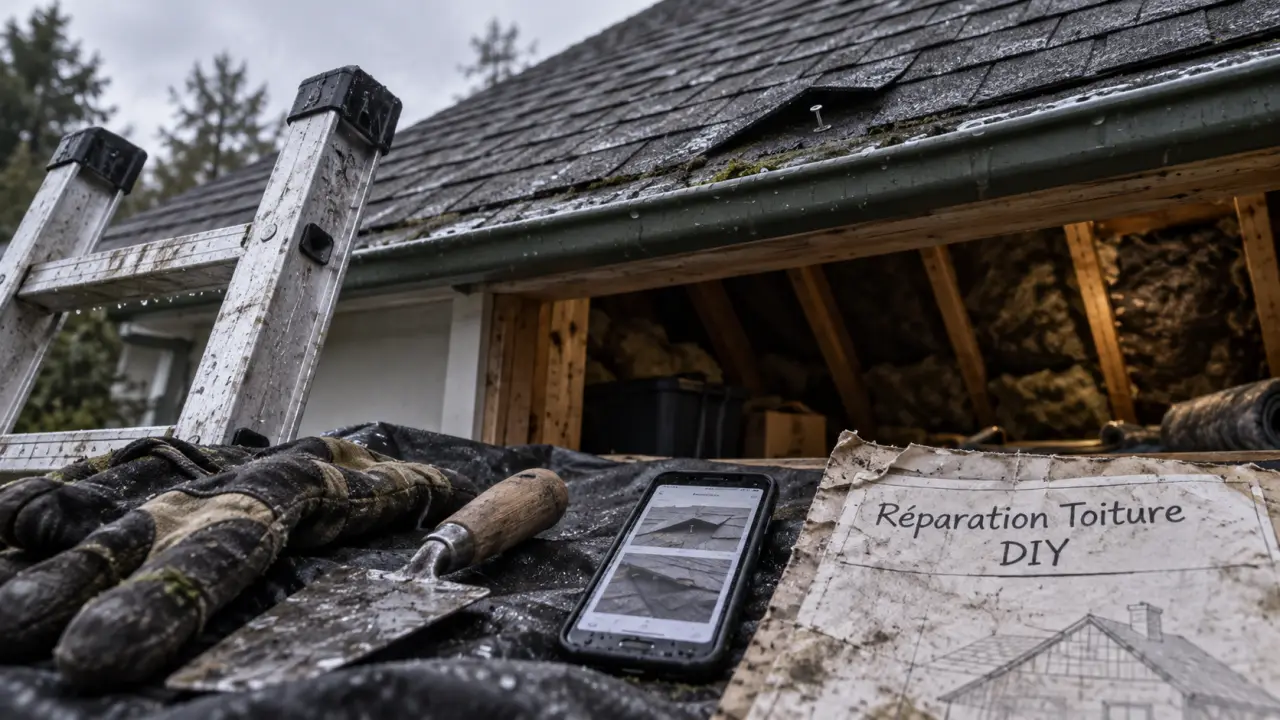
A DIY roof repair can make sense when the damage is minor, the roof is low and dry, and the surrounding structure looks sound. Replacing a few missing asphalt shingles or sealing one exposed nail is very different from repairing a leaking valley, chimney flashing, or soft roof decking. The practical goal is to know where DIY repair ends, before a small fix becomes a larger problem.
Start with a go-or-no-go decision
Before buying sealant or climbing a ladder, inspect the roof from the ground and then check the attic. DIY work is most realistic for one to three missing or lifted asphalt shingles, a clearly visible nail head, or routine gutter clearing. Postpone the work if the roof is wet, icy, steep, unusually high, or difficult to access safely.
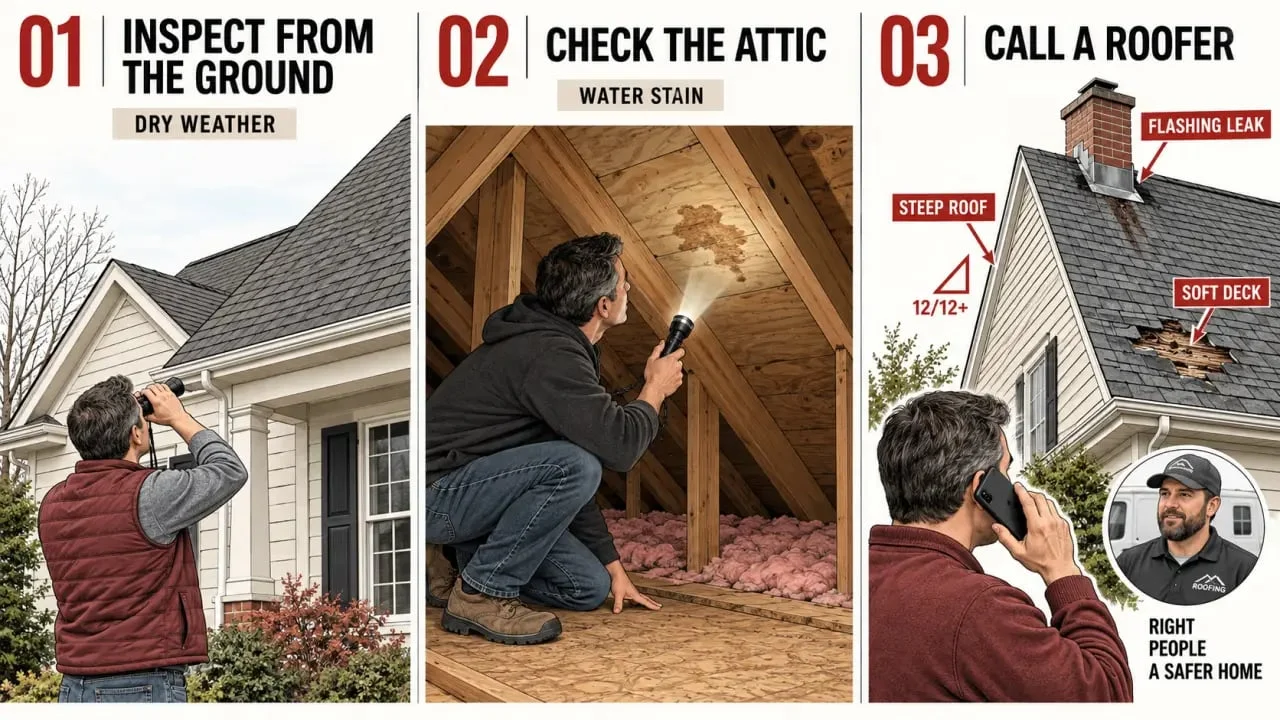
- Reasonable DIY scope: isolated shingle damage, a tiny pinhole, or a small seam gap that is easy to reach.
- Professional scope: flashing around chimneys, skylights, pipe boots, valleys, ridge vents, metal roofing, tile, slate, flat membranes, or multi-layer roofs.
- Stop immediately: if you find sagging, spongy sheathing, widespread granule loss, mold, repeated leaks, or electrical hazards nearby.
Roof work is also a physical decision. A bundle of asphalt shingles can weigh roughly 45 to 60 pounds. Carrying materials while keeping three points of contact on a ladder is not a beginner task. If you have doubts about your balance, mobility, or the roof’s condition, arrange a professional roof inspection instead.
Trace the leak before treating the visible symptom
Water rarely enters a house directly above the ceiling stain. It can travel along decking, framing, underlayment, or a pipe before appearing indoors. In the attic, look for damp insulation, dark wood, rusted fasteners, mold, or daylight around penetrations. Outside, inspect uphill from the suspected point. Roof valleys, vents, flashing transitions, and damaged shingles are common entry areas.
Use the lantern principle: follow the path, not the puddle
A lantern reveals depth by casting light across edges and shadows. Leak diagnosis works in much the same way. Do not focus only on the wet ceiling patch. Follow water marks backward across rafters and sheathing, and note where the staining becomes darker or fresher. This simple approach can help distinguish a displaced shingle from a blocked gutter forcing water under the edge or condensation caused by poor attic ventilation. A patch at the final drip point may leave the true opening untouched.
For an active drip, protect the interior first. Move belongings, collect water, and relieve a bulging ceiling only if you can do so safely. A temporary exterior patch may limit further water entry, but it is not a permanent repair. Photograph the damage before covering it, especially after wind, hail, or falling debris.
Repair a small asphalt-shingle defect carefully
Choose a cool, dry day. Hot shingles can scuff easily, while cold shingles may crack when lifted. Match replacement shingles by type, weight, profile, and manufacturer compatibility where possible. A close color match matters visually, but correct fit and overlap matter more for water resistance.
Replacing a lifted or missing shingle
- Set a stable extension ladder with a stabilizer or standoff. Wear non-slip footwear, gloves, and eye protection. Use appropriate fall protection for the height and roof pitch.
- Lift the shingle directly above the damaged area with a flat pry bar. Remove the fasteners holding the old shingle without tearing the surrounding material.
- Slide the replacement shingle into place, keeping its edges aligned with the neighboring courses.
- Fasten it according to the manufacturer’s instructions. Four nails are a common reference, but the required pattern varies by product and wind exposure.
- Re-seat the upper shingle. Use roofing cement sparingly where the original adhesive seal will not re-bond promptly.
Exposed nails and minor seam gaps
For a single exposed nail head that is otherwise secure, apply a small, neat cover of compatible roofing sealant. Do not spread cement across large areas. Excess material can trap debris, crack over time, and hide a developing problem. A very small flashing-seam gap may accept compatible sealant or flashing tape extending two to three inches beyond the defect. Full re-flashing belongs with a qualified roofer.
Budget for the whole repair, not just the shingle
DIY labor is not automatically free. A roofing nailer may cost approximately $100 to $200 or more, while a rooftop safety kit costs approximately $150 per person. Add a ladder or rental, compatible shingles, nails, sealant, disposal, permit fees where required, and the cost of correcting an unsuccessful repair.
| Option | Best fit | Main trade-off |
|---|---|---|
| Small DIY repair | Isolated, accessible asphalt-shingle damage | Safety gear and diagnosis can outweigh material savings |
| Professional repair | Leaks, flashing, difficult access, or an uncertain cause | Higher upfront labor cost, but clearer accountability |
| Replacement | Widespread wear, recurring leaks, failing decking, or an aging roof system | Largest project, but it addresses the complete assembly |
A few damaged shingles do not automatically require a new roof. However, an asphalt roof older than 20 years, with curling shingles, bald spots, repeated repairs, or broad granule loss, deserves a replacement assessment rather than a series of patches. Metal roofs older than 50 years also warrant a condition review, particularly around fasteners and penetrations.
Protect permits, insurance, and the roof system
Check with your local building department before starting work. Permit and inspection requirements vary, and even a modest repair may be regulated differently after storm damage or when structural components are involved. Read your homeowners insurance policy and roofing-material warranty as well. Manufacturer coverage, workmanship coverage, and insurance coverage are separate matters.
Keep receipts, photographs, product labels, and a short record of what you repaired. If the leak returns, the roof deck feels soft, or water appears around a chimney, skylight, valley, or vent, stop patching. A qualified roofer can inspect the covering, underlayment, drainage, ventilation, and decking as one system. That broader inspection can distinguish a contained repair from a problem that will eventually reach the ceiling.
{“@type”:”Article”,”@context”:”https://schema.org”,”headline”:”DIY Roof Repair Is Safe Only for Small, Accessible Asphalt-Shingle Damage”,”inLanguage”:”en-US”,”description”:”A DIY roof repair can make sense when the damage is minor, the roof is low and dry, and the surrounding structure looks sound. Replacing a few missing asphalt shingles or sealing…”}
Related guides to continue
To build a stronger understanding of this topic, continue with these related guides from the same site. They cover nearby decisions, maintenance points and practical details that often influence the final result.