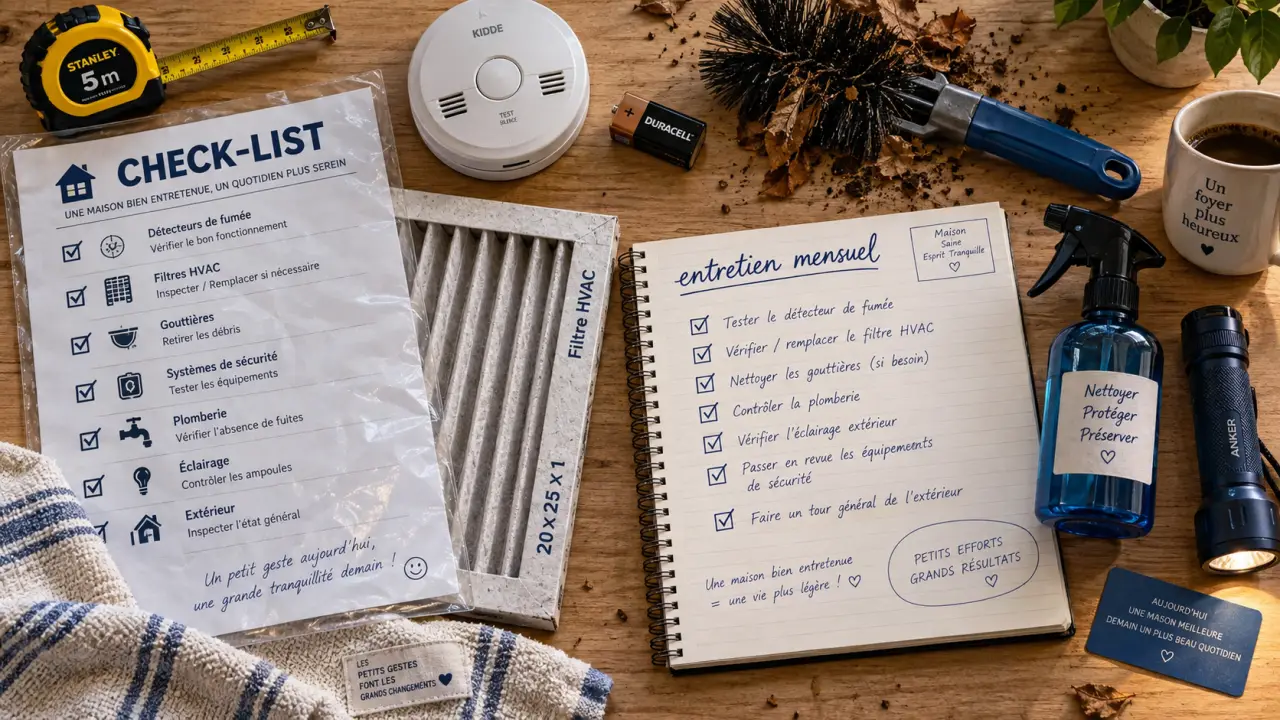
Good house maintenance is less about spending every weekend on repairs and more about noticing small changes before they become expensive problems. A damp cabinet, a slow gutter, a weak detector battery or a new draft can all be early warnings. This practical routine helps protect safety, comfort and the condition of your property without turning maintenance into a full-time job.
1. Build a monthly house maintenance habit around the highest-risk areas
Once a month, set aside 30 to 45 minutes for a deliberate walk-through. Start indoors, then move around the outside of the house. The goal is not to fix everything immediately. Look for changes such as stains, odors, drips, unusual noises, cracks or vegetation growing where it should not.
| Task | What to look for | Why it matters |
|---|---|---|
| Test smoke and carbon monoxide detectors | A working test button, an intact unit and no warning chirp | Protects occupants from fire and combustion risks |
| Check HVAC filters | Visible dust or restricted airflow | Helps maintain airflow and indoor air quality |
| Inspect under sinks and appliances | Moisture, corrosion, stains or damaged hoses | Finds small plumbing leaks before rot or mold develops |
| Walk around the exterior | Blocked downspouts, loose siding, cracks or standing water | Supports drainage and limits weather-related damage |
Focus on water before it reaches the structure
Open vanity cabinets and inspect the areas around toilets, sinks, dishwashers, washing machines and water-supply hoses. Look for discoloration, corrosion, mineral deposits, crimping or frayed braided hoses. In bathrooms, check the shower caulking, grout and seals around fixtures. A small section of failed caulking is usually a simple repair. Water that repeatedly gets behind a wall is not.
Run water briefly in infrequently used sinks and showers. A slow drain is easier to address before it becomes a full blockage. Also watch for humidity and mildew in bathrooms. Cleaning alone will not solve the problem if ventilation is poor or a seal is failing.
2. Follow the water’s orbit from roof to ground
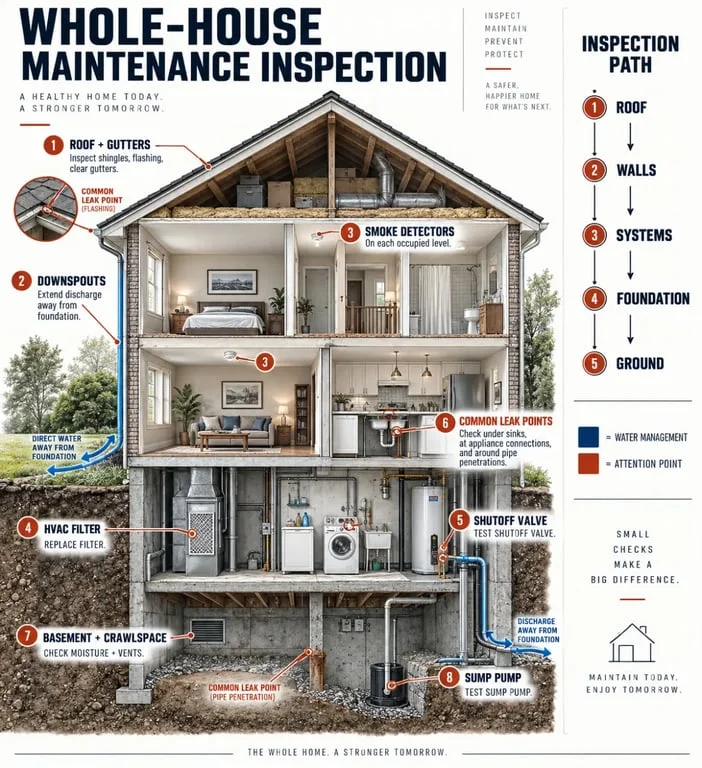
Rainwater affects more than one part of a house. It travels from the roof to the gutter and downspout, then reaches the splash zone, soil and foundation. A blockage at the top can later appear as peeling paint, damp basement walls, white deposits on masonry or a settling crack near the ground.
During a heavy shower, safely observe where water lands and where it flows afterward. Downspouts should carry runoff away from the house, while the ground around the exterior should slope away from the foundation. This simple rain-route inspection often reveals more than looking at a dry gutter.
Clear gutters and protect the roof edge
Clean gutters and downspouts when leaves, needles or debris restrict flow, especially after autumn leaf fall and before periods of heavy rain. From the ground, look for sagging sections, overflow marks, loose fasteners, damaged shingles and branches rubbing against the roof.
Do not climb onto the roof for a closer look. Ladder use carries real risk, with about 500,000 ladder-related injuries occurring each year. If access is awkward, the roof is steep or damage is visible, a qualified roofer is the safer choice.
Inspect the attic, basement and crawlspace
These less frequently visited areas can reveal what the exterior is hiding. Check for musty smells, damp insulation, pest activity, daylight around roof penetrations, cracked masonry or water marks after rain. In cold climates, watch for ice dams, which can trap melting water near the roof edge.
In a basement, test the sump pump with water and check its backup battery where fitted. Standing water, repeated dampness or widening cracks deserve professional assessment rather than repeated cosmetic patching.
3. Use the seasons to prepare systems before they are under pressure
Seasonal maintenance works best just before demand increases. Check heating systems before cold weather, drainage before wet weather and cooling equipment before hot weather. Your local climate, the age of the home and manufacturer instructions should refine the schedule.
- Spring: inspect the roof and gutters after winter, test the sump pump, check for thaw-related leaks, trim branches away from the house and examine driveway or walkway cracks.
- Summer: keep grass and weeds clear from the outdoor HVAC unit, check air-conditioning filters at least twice a month during heavy use, inspect screens and look for pests or standing water.
- Fall: clean gutters, seal gaps around windows and doors, schedule heating maintenance, inspect the fireplace before use and drain or shut off outdoor faucets and sprinkler systems before freezing weather.
- Winter: monitor drafts, condensation, ice buildup and exposed pipes. Insulate vulnerable plumbing and respond quickly to signs of freezing.
Check air filters monthly and replace or clean them when dirty. Air-conditioning filters should be changed at least every three months. Garage-door moving parts can be oiled every three months, while faucet aerators benefit from cleaning every three to four months. These small jobs can prevent poor performance from being mistaken for major equipment failure.
4. Reserve professional work for height, heat, electricity and hidden damage
DIY maintenance is suitable when you can work from the ground, isolate a system safely and understand the task. Testing GFCI outlets with their test and reset buttons, replacing a filter, checking weather stripping, cleaning accessible vents and photographing a crack for monitoring are reasonable homeowner jobs.
Keep receipts, dates, warranties and before-and-after photographs in a simple maintenance log. These records can help with insurance documentation and future resale.
Know the escalation signs
Call a licensed plumber for an active leak, recurring drain backup, a change in water pressure or a damaged supply line. Arrange an HVAC technician visit for repeated cycling, weak airflow after a filter change, unusual smells or a system that cannot maintain temperature.
A chimney sweep should inspect and clean a fireplace and chimney before frequent seasonal use. One reported average puts chimney fires at 22,300 each year. Electrical burning smells, warm outlets or repeatedly tripping breakers require an electrician, not trial and error.
Plan financially as well as practically. Typical maintenance is often budgeted at one to three percent of the home purchase price each year, with three percent suggested for older homes or properties needing renovation. This is not a repair quote or a rule for every house. It is a way to build a reserve. For example, three percent of a $100,000 home is $3,000. Prioritize safety defects and active water intrusion first, then efficiency, followed by cosmetic work.
{“@type”:”Article”,”@context”:”https://schema.org”,”headline”:”House Maintenance: 4 Checkpoints That Catch Leaks, Drafts and Fire Risks Early”,”inLanguage”:”en-US”,”description”:”Good house maintenance is less about spending every weekend on repairs and more about noticing small changes before they become expensive problems. A damp cabinet, a slow gutter,…”}
Related guides to continue
To build a stronger understanding of this topic, continue with these related guides from the same site. They cover nearby decisions, maintenance points and practical details that often influence the final result.