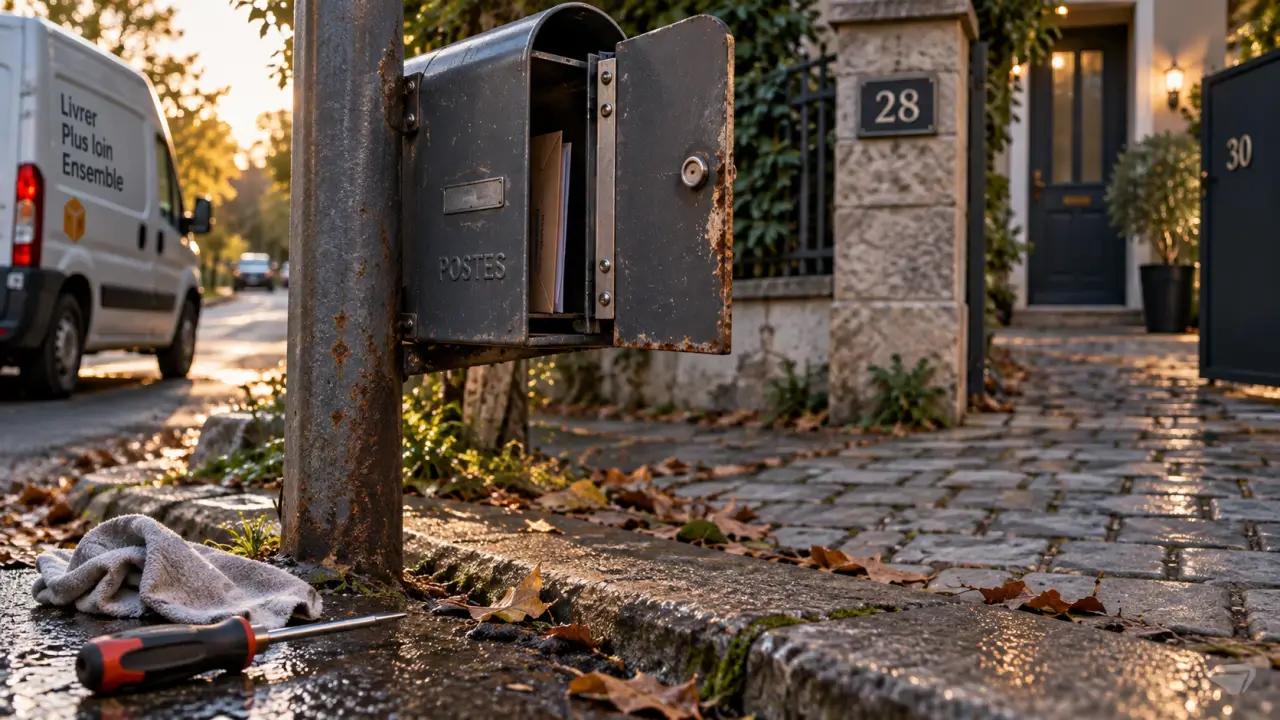
A mailbox rarely fails without warning. A stiff door, leaning post, faded address numbers, or spreading rust can gradually make delivery less reliable. A short inspection and a few timely repairs help protect the mail inside, keep the carrier’s approach clear, and prevent a minor defect from turning into a full replacement.
Start with a five-minute mailbox inspection
Inspect the mailbox when the seasons change and after severe weather, a vehicle strike, or suspected tampering. Open and close the door several times. It should move freely, close securely, and sit correctly on its hinges. Check the flag, latch, screws, seams, and mounting points. Loose hardware can deteriorate quickly when exposed to wind and repeated use.
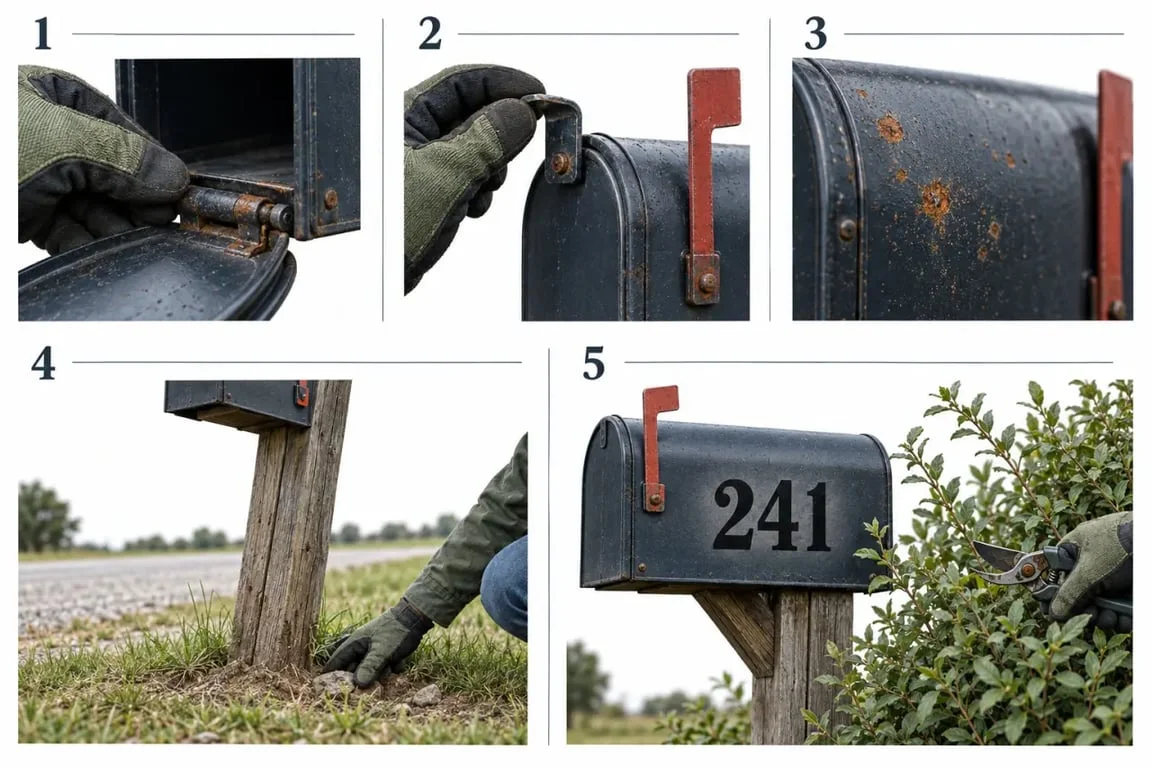
- Check that the post is upright and does not wobble at ground level.
- Look for rust bubbles, peeling paint, cracks, sharp edges, or split material.
- Make sure the door closes without force and that rain cannot easily enter.
- Confirm that address numbers are clean, readable, and visible from the delivery approach.
- Clear leaves, litter, overgrown shrubs, insect nests, snow, or bins that obstruct access.
Do not judge a post only by whether it is still standing. Push it gently from different directions and inspect the connection between the box and the post. A post may appear straight while its fasteners, bracket, or wood beneath the paint have started to fail. The mailbox depends on this chain of connections, including the post, bracket, screws, box, and surrounding soil. Repair the weakest connection first instead of reinforcing the part that looks most visible.
Fix small defects before weather makes them structural
Loose doors, hinges, and hardware
Tighten accessible screws and nuts with correctly sized hand tools. If a hinge is dirty or dry, remove grit before applying a small amount of suitable lubricant. Avoid applying too much, since excess product collects dust and can stain the finish. A bent door, broken hinge, or latch that will not stay closed is more than a cosmetic defect. It can leave letters and parcels exposed to moisture or loss.
Rust, peeling paint, and surface damage
Surface rust can often be treated before it reaches the metal underneath. Remove loose paint and flaky corrosion, clean the area, let it dry completely, then apply a coating suited to the mailbox material and outdoor exposure. Intact paint limits water contact at seams and scratches, so the repair protects the surface as well as improving its appearance.
Repainting will not restore structural strength when corrosion has created holes, weakened the door edge, or spread around mounting points. In those cases, inspect the affected area carefully before deciding whether the box can be repaired or should be replaced.
A leaning or unstable mailbox post
Identify the cause before making a repair. The problem may come from loosened fasteners, decayed wood, damaged metal, washed-out soil, or an impact. Retightening the box to a sound post may solve the issue. A post that moves at its base, has a crack, or no longer holds the mailbox level needs a more substantial repair or replacement.
Keep the mailbox stable, upright, and reachable. Before changing its placement or height, check the applicable postal requirements. A repair that improves stability should not create a problem with delivery access or compliance.
Keep delivery access and identification straightforward
Maintenance also includes the area around the box. Trim landscaping so it does not brush against the door, hide the address, or narrow the carrier’s approach. Keep refuse containers, parked vehicles, and seasonal decorations out of the way on delivery days. In winter, remove snow and ice that make the route difficult or conceal the mailbox.
Use durable address numbers with strong contrast against the box or post. They should be visible from the direction the carrier approaches, not only from the front walk. Clear address numbers help with everyday delivery and make the property easier to identify for visitors and emergency services.
If you install a new curbside mailbox or move an existing one, consult current USPS guidance or your local post office. Do not rely solely on a neighbor’s setup, since local delivery conditions can affect the appropriate placement.
Know who should arrange maintenance and repairs
Responsibility generally follows ownership, but a lease, homeowners association rules, or property-management agreement may change the practical arrangement. Report damage promptly and keep a dated photo record, especially when delivery access or mail security is affected. This creates a clear record of the condition and the steps already taken.
| Situation | Usual maintenance lead | Practical next step |
|---|---|---|
| Owner-occupied home | Homeowner | Inspect and repair the mailbox, then confirm postal compliance before altering its placement. |
| Rental property | Often the landlord, subject to the lease and local rules | Notify the landlord in writing. Do not assume the tenant can replace the box. |
| Shared or community mailbox | HOA, community association, or property manager | Report faults to the designated manager and ask who coordinates postal services. |
Decide when repair is no longer the sensible option
Repair makes sense when the box is fundamentally sound. Surface rust, faded paint, loose screws, replaceable numbers, or a minor hinge issue are manageable. Replacement becomes the better option when the door will not secure, corrosion has perforated the metal, the body is warped, the post is unsafe, or repeated repairs no longer restore reliable use.
Choose a replacement for durability, weather resistance, carrier access, and the level of security you need, not for appearance alone. A locking, theft-resistant design can reduce casual access to delivered mail, but it must still work properly with the delivery method used at your address. Consider both security and carrier access before buying.
After tampering or vandalism, photograph the damage and protect any remaining mail. Report the incident to local police and the Postal Inspector. The Postal Inspector reporting number is 1-877-876-2455. Repair or replace the damaged parts only after documenting the condition and confirming that the mailbox can still support secure, reliable delivery.
{“@type”:”Article”,”@context”:”https://schema.org”,”headline”:”Mailbox Maintenance Starts with Stability, Rust Control, and Clear Access”,”inLanguage”:”en-US”,”description”:”A mailbox rarely fails without warning. A stiff door, leaning post, faded address numbers, or spreading rust can gradually make delivery less reliable. A short inspection and a…”}
Plan the repair before you start
Most home improvement projects go better when you separate inspection, preparation and execution. Look for water damage, loose fasteners, unsafe access, hidden utilities and signs that a small visible defect may hide a larger problem. A quick checklist can prevent buying the wrong product or starting a repair that should be handled by a licensed contractor.
Safety comes first on roofs, decks, plumbing, electrical work and exterior structures. If the job requires climbing high, opening sealed systems, handling gas or changing load-bearing parts, treat this guide as planning help rather than a replacement for professional work.
Related guides to continue
To build a stronger understanding of this topic, continue with these related guides from the same site. They cover nearby decisions, maintenance points and practical details that often influence the final result.