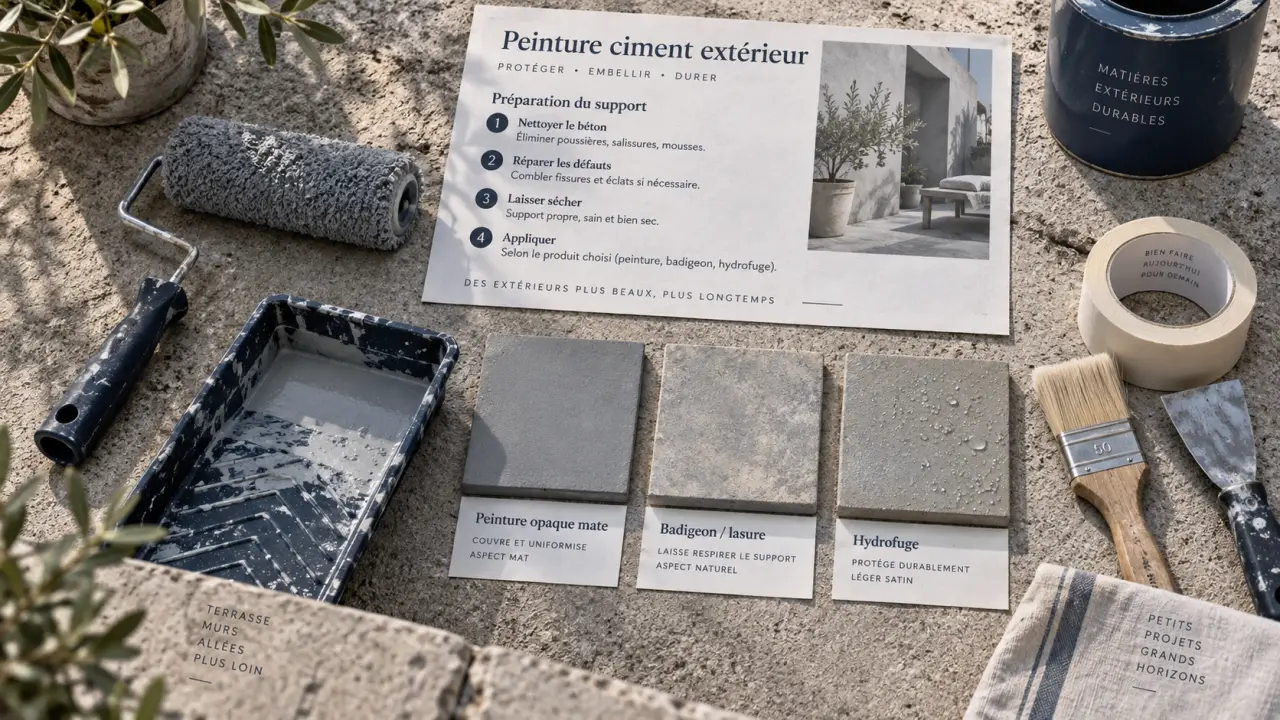
Outdoor cement paint can refresh a tired patio, concrete wall, porch step, or masonry border. The right choice depends on more than color. Surface condition, exposure to rain, foot or vehicle traffic, and the finish you want should all guide the product you buy.
Start with the job the finish needs to do
“Cement paint” is often used as a broad label, but exterior concrete and masonry products do different jobs. A driveway exposed to vehicles has different requirements from a rendered wall or decorative garden planter. Buying by color alone is one of the quickest ways to end up with peeling, poor coverage, or a finish that does not suit the surface.
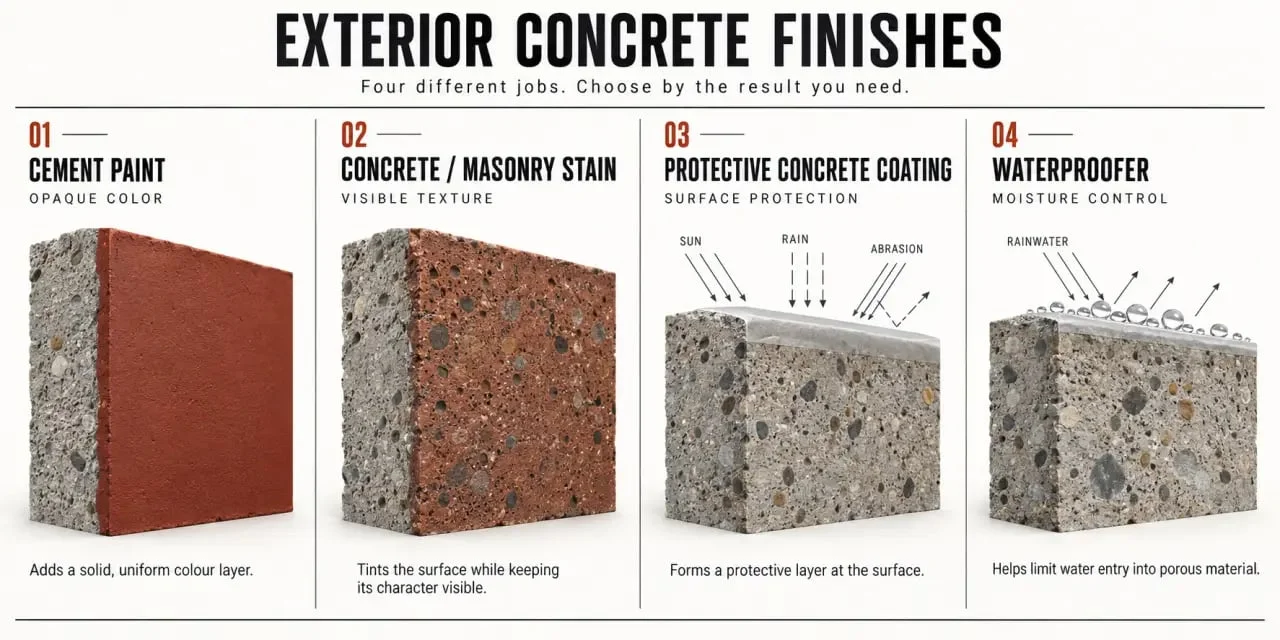
| Product type | Best use | What it changes |
|---|---|---|
| Exterior concrete paint | Walls, steps, porches, and suitable concrete areas | Creates an opaque, colored finish |
| Concrete or masonry stain | Decorative concrete where the surface texture should remain visible | Adds color with a more natural, less film-like look |
| Protective concrete coating | Areas that need a tougher protective layer | Combines surface protection with a defined finish |
| Waterproofer | Masonry exposed to moisture where appearance is secondary | Focuses on limiting water penetration |
Paint is usually the better option when you want an even, solid color. Stain keeps more of the mineral character visible and gives a less uniform result. A protective coating deserves consideration on surfaces exposed to heavier wear. A waterproofer is different: it may help limit water penetration without producing the decorative appearance you expect from paint.
Read the surface before choosing outdoor cement paint
Concrete, cement, and masonry are related, but not identical
Outdoor cement paint is commonly marketed for concrete and masonry, but compatibility still needs checking on the product page or technical label. Concrete slabs, cement render, brick, block, and previously painted masonry can absorb products differently. A coating made for a vertical wall may not be suitable for a horizontal surface that collects water or receives regular foot traffic.
Check the age and condition of the surface as well. New concrete or cement-based materials may need sufficient curing time before a coating is applied, while older masonry may have several layers of paint or repair material. The product instructions should decide whether the surface is suitable and whether a primer is required.
Think about water movement, not just rain
Moisture does not only arrive from above and leave again. It can reach an exterior surface as rainfall, splashback at the base, dampness from the soil, or water held in cracks and joints. Evaporation then moves through warmer exposed areas. A dense coating applied over persistently damp masonry can trap moisture beneath the finish and create pressure that encourages peeling.
Before painting, identify where water sits, where it splashes, and whether damp patches return after the surface dries. Drainage problems, cracks, or contact with wet soil may need attention first. Correcting the cause of moisture often protects a new finish better than choosing a more expensive product.
Compare durability, finish, and color with a clear priority
For a wall, appearance may lead the decision. For steps, a terrace edge, or a driveway, resistance to wear matters more. Look for clear confirmation that the product is designed for exterior use. Indoor paint is not a sensible substitute for a surface exposed to sun, rain, temperature changes, dirt, or repeated contact.
- For walls and rendered masonry: prioritize exterior compatibility, color retention, and a finish that suits the surface texture.
- For porches and steps: check that the product is intended for horizontal concrete and matches the expected level of wear.
- For driveways: look specifically for products rated for driveways or vehicle traffic. Ordinary decorative wall paint is not enough.
- For damp-prone masonry: deal with the source of moisture, then compare breathable or moisture-appropriate systems instead of simply adding paint.
Color also calls for a practical decision. Very pale shades can brighten a shaded courtyard, but they may show tire marks, soil, and splashback more readily. Deep colors can make a boundary wall recede visually, yet dust or fading may be more noticeable depending on exposure. Test a small area in the actual outdoor light before committing. The same gray can look cool beside stone and warmer beside brick.
Preparation is where a long-lasting finish begins
Even a professional-quality exterior coating cannot bond properly to dust, algae, loose paint, or a weak concrete surface. Preparation products and tools should be planned alongside the paint, not treated as an afterthought. This is especially important when the existing finish is old or its composition is unknown.
- Inspect: look for cracks, flaking areas, powdery residue, stains, biological growth, and signs of standing water.
- Clean: remove dirt, grease, algae, loose material, and other contaminants with a method suited to the surface and the product instructions.
- Repair: fill cracks or damaged areas with a compatible exterior repair material, then allow the repairs to cure as directed.
- Create a sound base: remove unstable old coatings and use any primer or preparation product required for bare, porous, or previously painted masonry.
- Apply in suitable conditions: follow the stated temperature, drying, recoating, and weather limits exactly.
A frequent mistake is painting a surface that feels dry on top but still contains moisture below. This can happen after rain or washing, especially on porous concrete and masonry. Allow the substrate enough time to dry, and avoid working when rain, heavy dew, or extreme temperatures could interfere with curing. A small test area can also reveal problems with adhesion, absorption, or color before the whole surface is covered.
Buy by system, not by the most attractive label
When comparing outdoor cement paint from a paint specialist, building supplier, or marketplace, begin with the manufacturer’s recommendations for the surface and exterior use. Then check whether compatible cleaner, repair compound, primer, and topcoat are available from the same brand. A coordinated system can reduce guesswork when the surface is porous, difficult, or previously coated.
Before purchasing, make a short checklist covering the substrate, location, traffic level, moisture history, desired sheen, color, preparation requirements, and total area. This makes it easier to compare product categories instead of focusing only on container size or headline price. Check the coverage information and application requirements as well, because the cheapest container may not be the cheapest way to complete the project.
The best value is a finish that suits the surface, handles its exposure, and does not need to be redone after one season. If the project involves a damp wall, a heavily used driveway, or an uncertain existing coating, spend more time confirming compatibility before buying. That decision will usually matter more than the color shown on the label.
{“@type”:”Article”,”@context”:”https://schema.org”,”headline”:”Outdoor Cement Paint: Choose the Wrong Coating and You May Trap Moisture”,”inLanguage”:”en-US”,”description”:”Outdoor cement paint can refresh a tired patio, concrete wall, porch step, or masonry border. The right choice depends on more than color. Surface condition, exposure to rain,…”}
Related guides to continue
To build a stronger understanding of this topic, continue with these related guides from the same site. They cover nearby decisions, maintenance points and practical details that often influence the final result.